Description
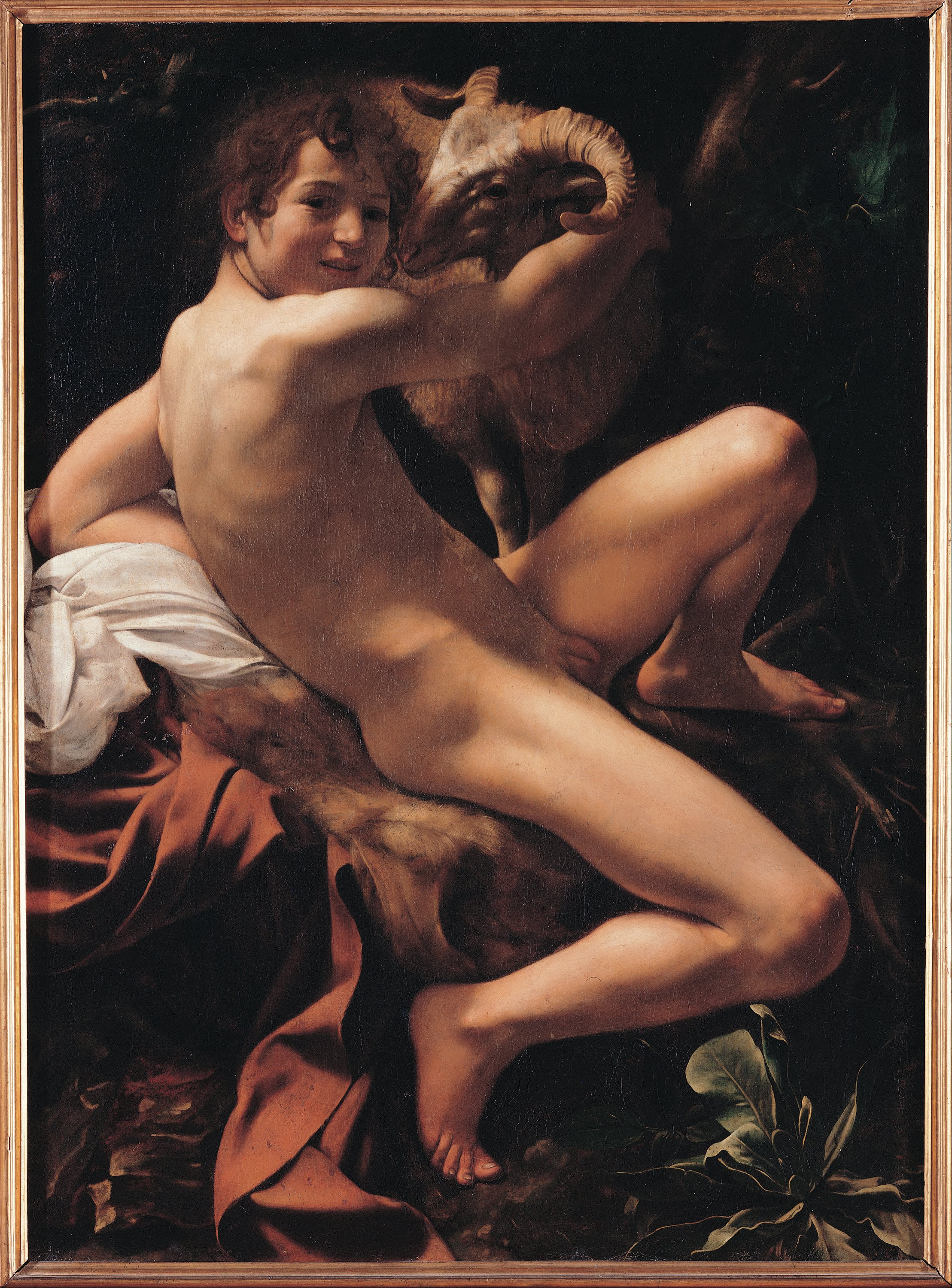
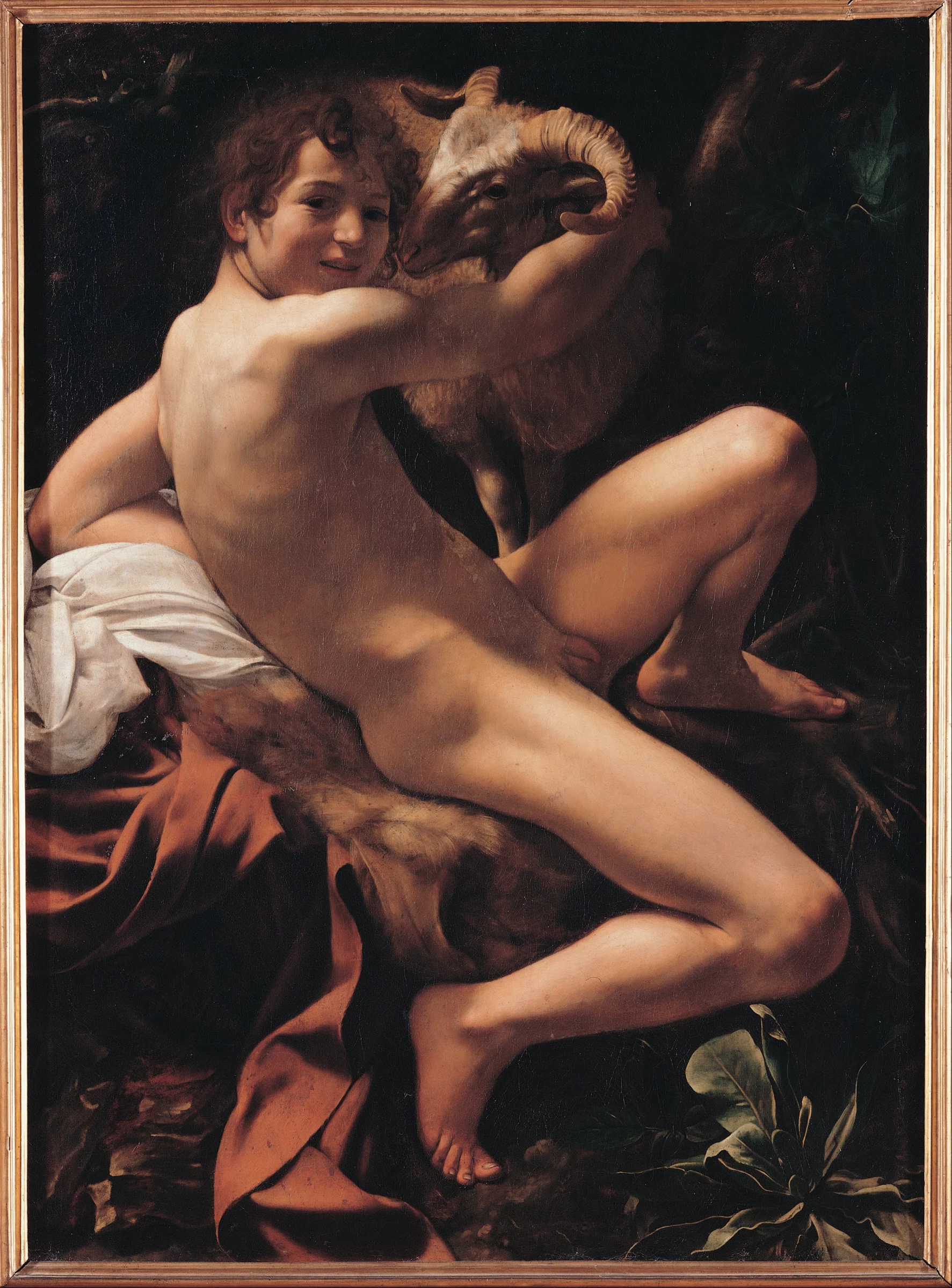
Saint John the Baptist, painted in 1602 for Ciriaco Mattei, depicts the saint as a naked youth reclining on animal skins and draperies, embracing a ram and smiling directly at the viewer.
Caravaggio radically departs from the traditional iconography of the Baptist. The ascetic figure of the desert becomes a youthful and intensely physical presence, represented with a naturalism that almost eliminates the distance between sacred imagery and everyday reality.
The youth's pose recalls Michelangelo's ignudi on the ceiling of the Sistine Chapel, but Caravaggio replaces Renaissance idealization with the direct observation of a living model. Light strikes the boy's back, face and leg, causing his body to emerge dramatically from the darkness. The youth’s smile and the ram complicate the expected signs of the Baptist. Their ambiguity becomes especially meaningful when the picture is understood as a private commission.