Description
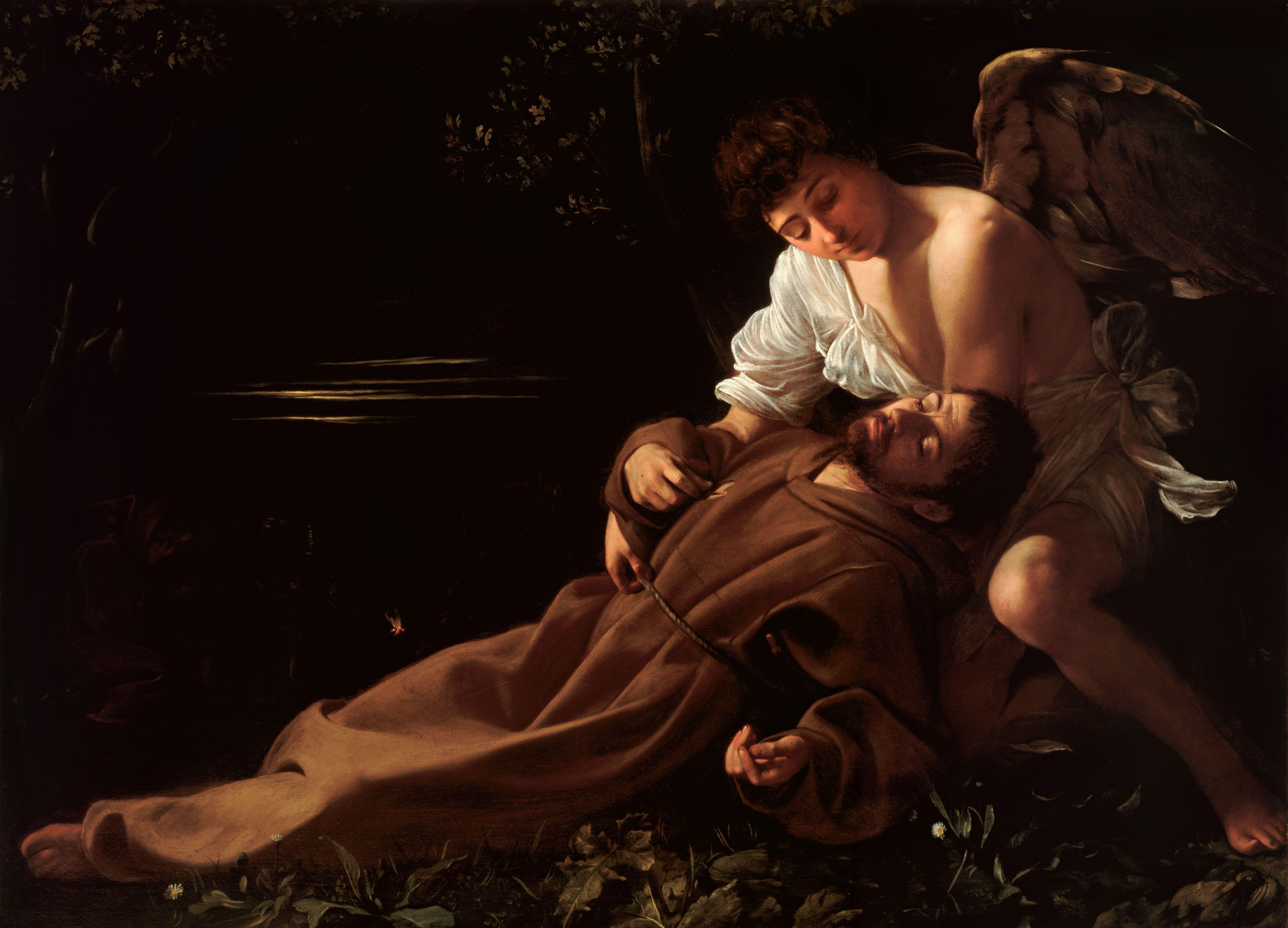
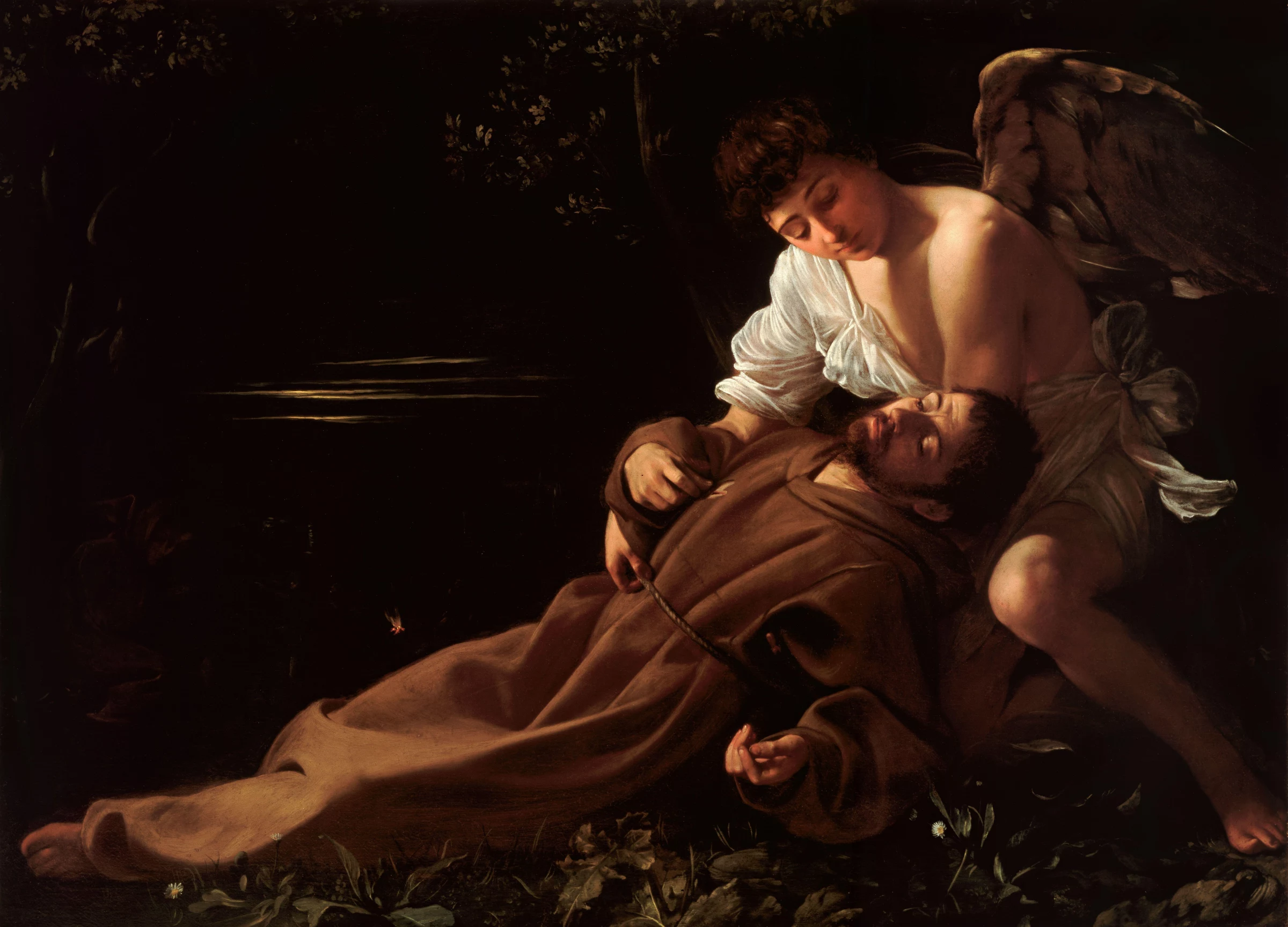
Saint Francis of Assisi in Ecstasy, painted around 1595, is one of Caravaggio's earliest major explorations of religious painting. The artist depicts Saint Francis's mystical experience associated with the reception of the stigmata, but departs from traditional iconography to create an intimate and profoundly human interpretation of the event.
Francis collapses into the arms of a youthful angel who gently supports him. Rather than presenting the miracle through a spectacular celestial apparition, Caravaggio concentrates attention on the physical relationship between the two figures. The saint's abandoned body recalls the pose of the dead Christ, establishing a symbolic connection between Francis's experience and the Passion.
The painting already displays several characteristics that would define Caravaggio's mature art: the transformation of the supernatural into a physically credible experience, the emotional proximity of the figures, and the use of light to make a religious event immediately accessible to the viewer.