Description
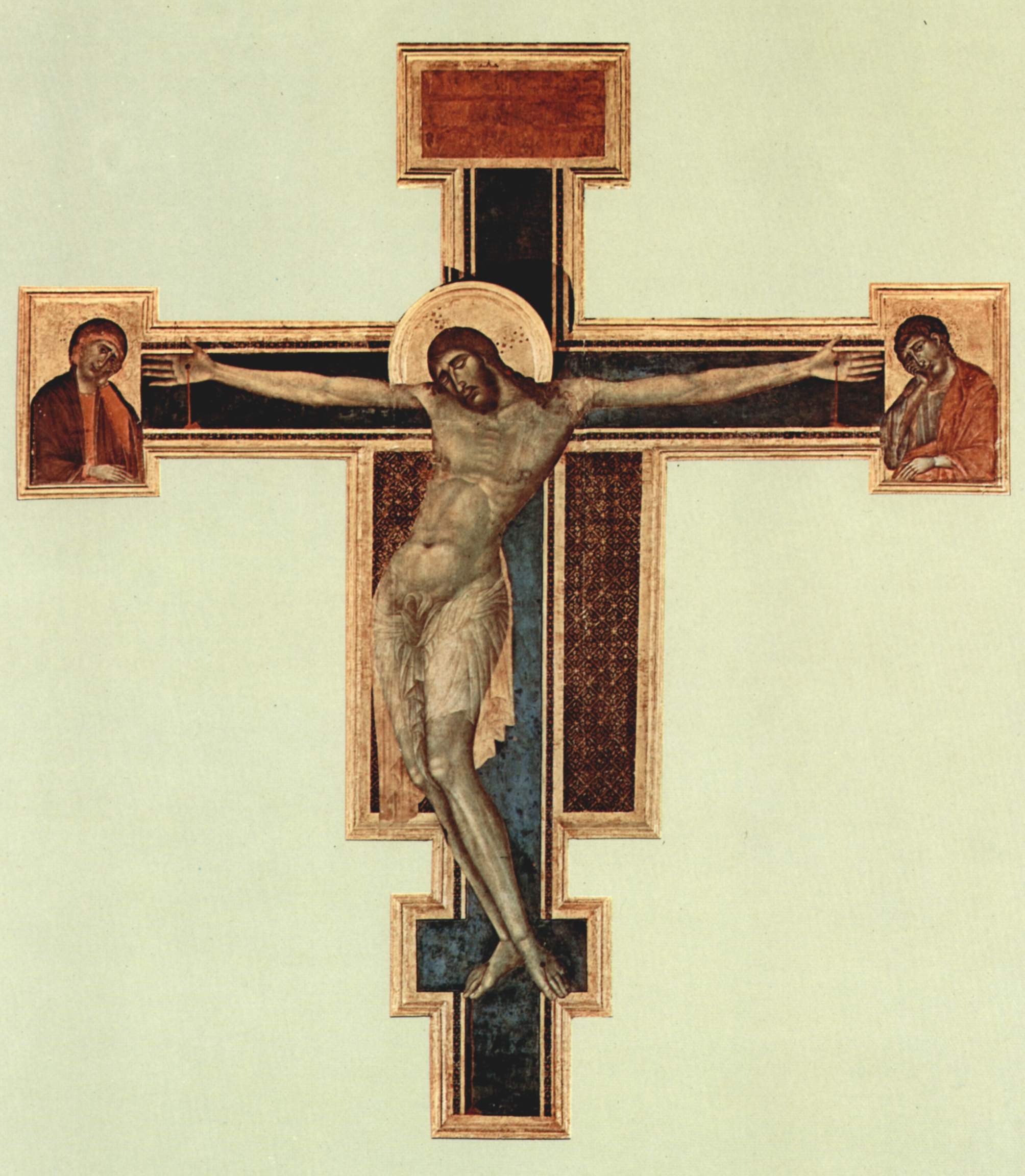
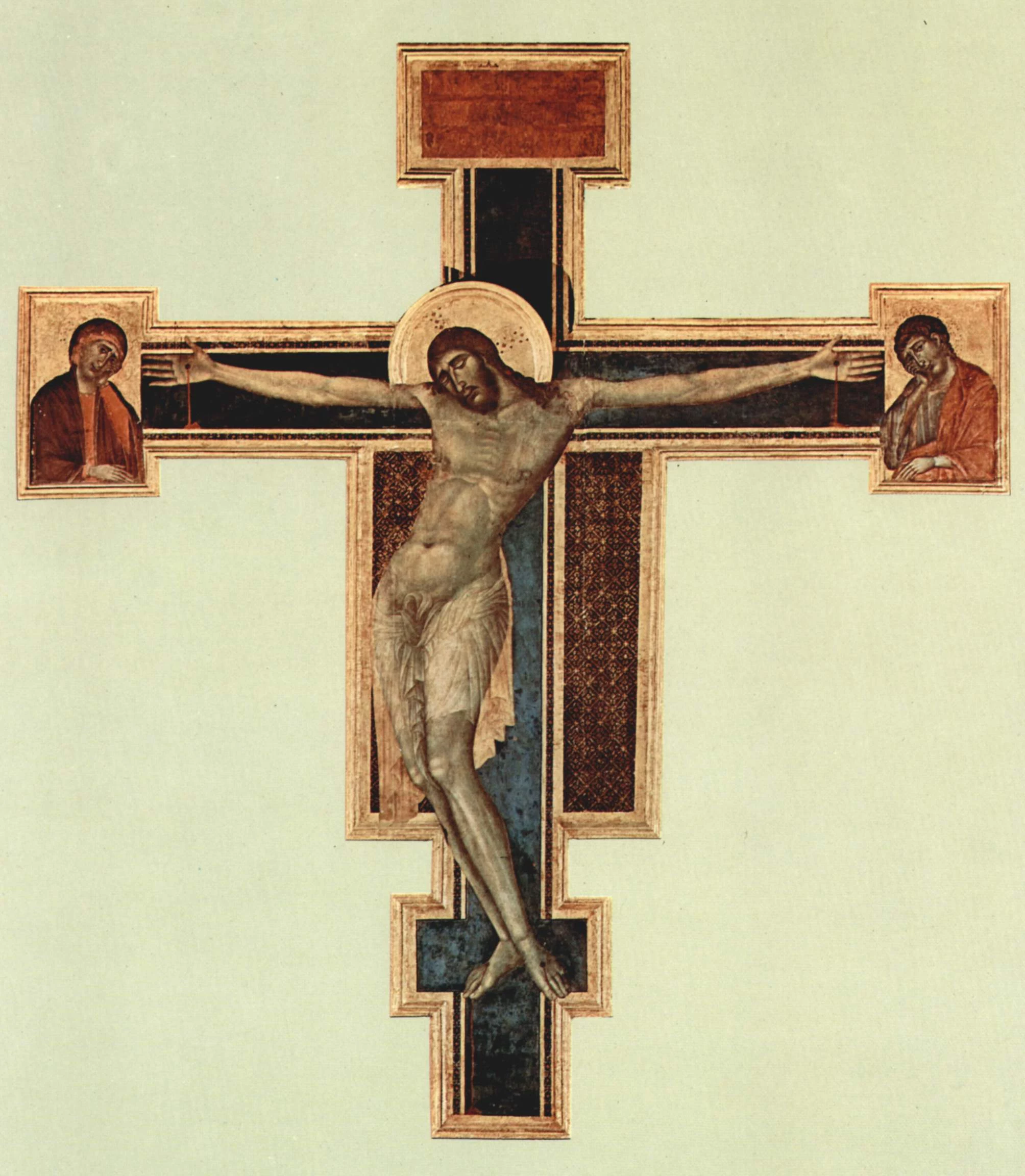
The Crucifix of Santa Croce is one of the major works of Cimabue’s mature period and a key example of the transformation of Italian painting during the thirteenth century. Created for the Franciscan environment of Santa Croce in Florence, it once again develops the image of the Christus patiens , but with a considerably more naturalistic conception of the body and suffering than that seen in the earlier Crucifix of San Domenico in Arezzo.
Christ is shown dead upon the cross, his head inclined and his body displaced sideways in a broad continuous curve. The figure is no longer constructed primarily through rigid anatomical formulas. Instead, Cimabue uses increasingly subtle modelling to suggest muscles, joints and bodily volumes. The work was gravely damaged in the Florence flood of 1966. Its surviving paint now records both Cimabue's achievement and the history of conservation.